

Commerce 11 release
In update 174 we shipped a version 11 release of Commerce. This is a semantic versioning major release as part of our continuous release process. The main focus is on improvements the platform, where these improvements require changes to our public API. It also includes new features for merchandisers based on the included changes we made in the Catalog system and API.
Merchandising improvements
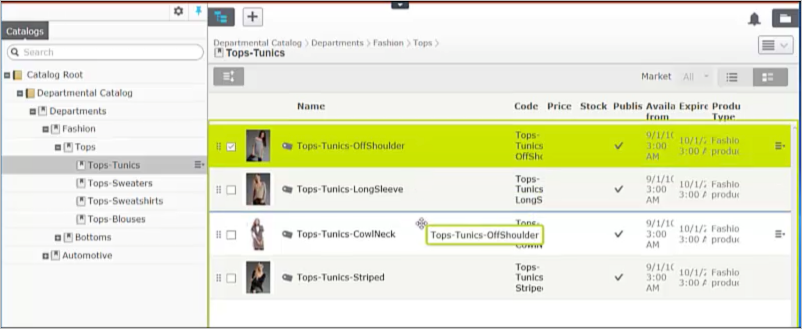
In the Catalog Manager UI, a new "sort mode" feature lets you change the sort order (the ranking) of items in a category. After clicking the sort mode button, you select one or more items then drag and drop them to the new location. This position is independent for each category association.
For each catalog entry, you can now assign one primary category and any number of additional categories. They appear on the product's "Categories" and "Belongs to" views.
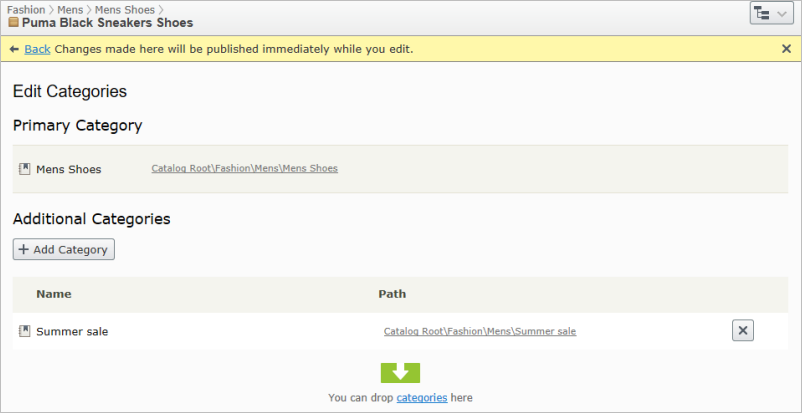
The primary category is the product's home location, which means that the product is located in this category. If a product's URL is based on the Name in URL property, the URL uses the primary category path. If you move a product, its primary category changes, and its URL changes accordingly.
API Improvements
- 73 bug fixes (public bugs listed on the Commerce 11 release notes).
- Supporting return order form in new order system APIs.
- Improved redirection support for payment providers.
- Catalog import performance and testability.
- The default implementation of IPriceService automatically optimizes prices, so the lowest unit price for same market, currency and minimum quantity is selected. This change allows a merchandiser to easily change the way in which selected prices are saved, without having to implement the IPriceService interface.
- VNext activity flows are now default. Legacy ones can be enabled by feature switch.
- Uplifted the minimum supported .NET version from 4.5 to 4.5.2 and MVC version to 5 and above.
- Remove legacy areas of our API including:
- /nSoftware
- Legacy asset system
- Obsoleted APIs that are expired
- Removes ApplicationID to simplify APIs use
Related topics
Previously published information about Commerce 11:
About the Episerver continuous release process:

Comments