
From websites to agents. Five takeaways from the Optimizely Partner Close-Up in Stockholm
Last week was the annual partner close-up event in Stockholm, Sweden, fast becoming a favourite Optimizely event of the year. An opportunity to meet with fellow OMVPs, the senior Optimizely team and partners to have some great, candid conversations, as well as get some insights about Optimizely's direction for the year ahead.
For those of you not fortunate enough to attend last week, I've written a short summary broken down into five key takeaways.
For most of the last decade, our industry has been stuck in a loop. We have built broadly the same websites, with broadly the same patterns, for broadly the same reasons. Staffan Lindgren called it out plainly at the Partner Close-Up: a period of stagnation, propped up by rigid processes and incumbent thinking. That era is over. What is replacing it is something closer to a Cambrian explosion. A move from manual content entry into an age of agentic orchestration.
I came away from Stockholm with five things stuck in my head. Not predictions. Not hot takes. Just the observations that felt the most consequential as I was sitting in the room. Here they are.
1. The shift from digital experience to agentic experience
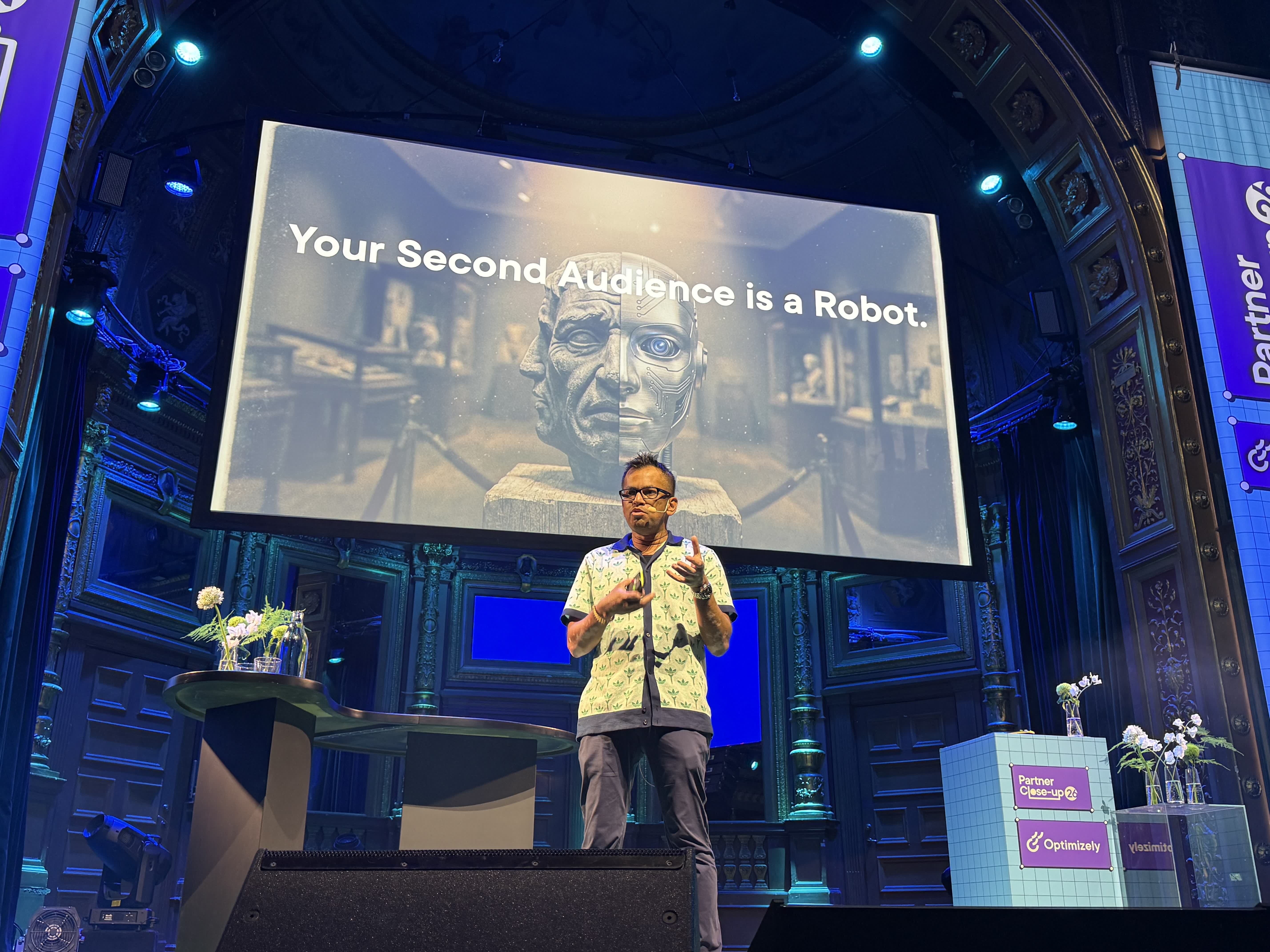
The most fundamental shift on the agenda was the pivot from Digital Experience to what Nazanin Ramezani framed as Agentic Experience. The argument is that AI is starting to cannibalise the traditional user interface. As agents begin to sit between brands and their users, the CMS gets reframed. Not as a visual application. Not as a place where editors craft pages. But as a system of record. A purpose-built content database. An infrastructure layer.
That has practical consequences. It means a dual-content strategy. For humans, you want ephemeral, on-demand content generated in the moment. For machines, you want what Nazanin called nutrition labels: highly structured, factual data designed for Retrieval-Augmented Generation (RAG).
And the next "hire" isn't a tool. It's a virtual teammate. Agents like Optimizely's virtual team-mate 'Olga' aren't chat buttons sitting in the corner of a screen. They are always listening, have their own identity and proactively flag issues to your team when performance dips. That is a significant change in how we think about who or what sits inside the team.
"The CMS is becoming an infrastructure layer, a purpose-built content database, like a CRM for customer data. Expect ephemeral, on-demand content for users and a rise in websites for agents." Nazanin Ramezani
2. Stop selling shovels. Start selling holes.
The second thing that landed was about commercial models. Where modern agencies can best add value is a pivot from technical wizardry to outcome orchestration. We have to stop selling software features (the shovels) and start selling business outcomes (the holes). In the agentic era, software is moving towards a model where labour is embedded directly into the code.
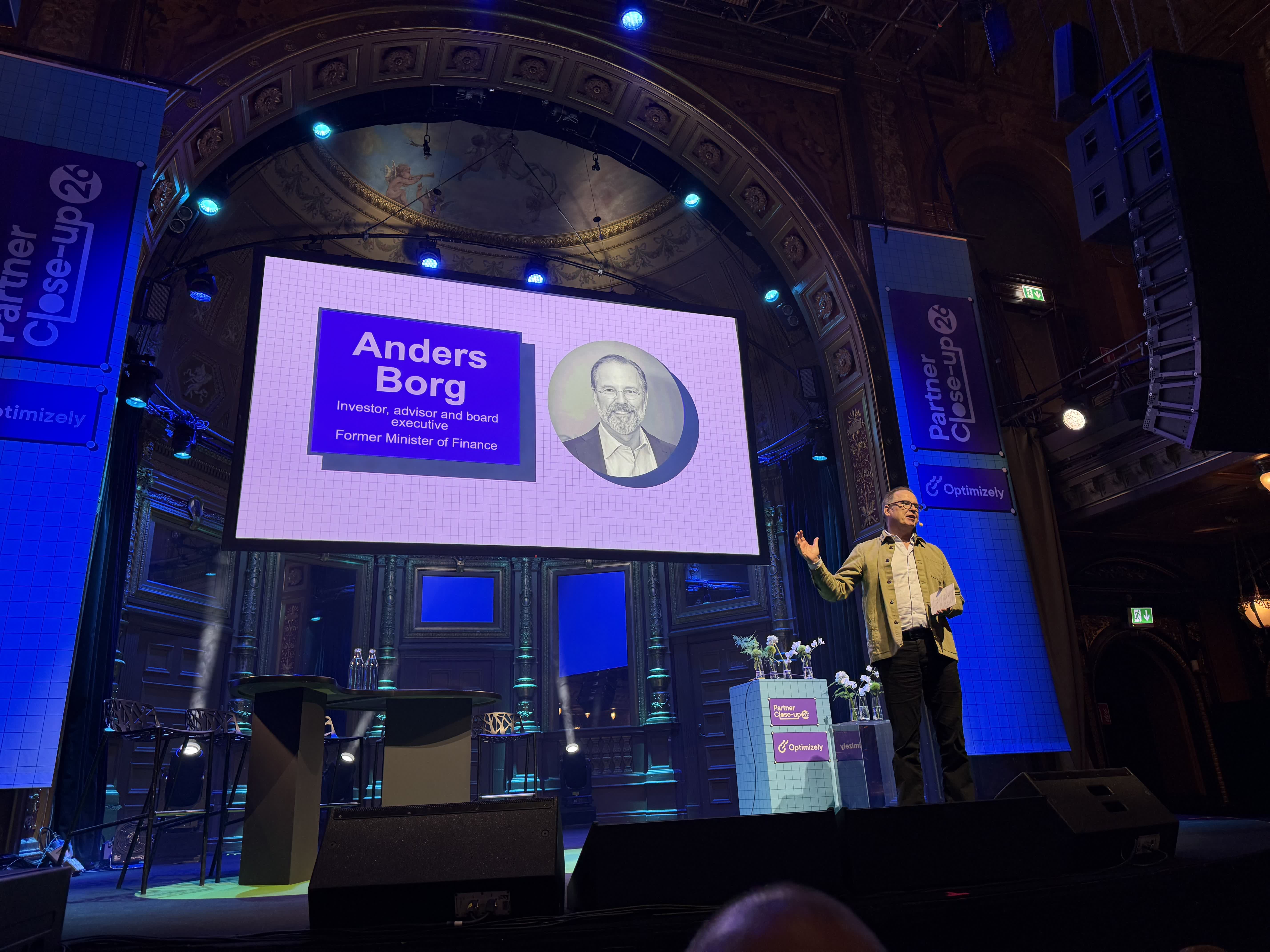
The macroeconomic case for this came from Anders Borg, Sweden's former finance minister. His framing is that AI is a Capex mandate, not a line item. Large-scale system overhauls tend to carry high risk and moderate returns. Internal process automation, things like agents for travel expenses or coding assistants, can yield Internal Rates of Return of 30% to 100%. Right? Those are not numbers you ignore.
The challenge for partners is to align our go-to-market with those hurdle rates. AI is a productivity engine. We have to prove that, not assert it.
3. The gap between the demo and the day job
There is a stark distance between an impressive AI demo and what is actually running in production. Epinova shared figures showing that 45% of Nordic sites and up to 57% of European sites are still on CMS 11 or older. That is the reality most clients are operating from. Fear of complexity is keeping organisations stuck on platforms that predate the entire current conversation about AI.
The version number is only part of the story. Many organisations sitting on CMS 12 are still running legacy content models and 2015-era workflows. Modernisation isn't a version upgrade. It is a total rethink of how content is structured so that it is agent-ready in the first place.
Staffan made a point that stuck with me. The role of the partner is now one of psychological de-risking. When we strip out the complexity and the fear around AI, senior executives move from being terrified to being empowered. They make faster decisions. They commit.
This is exactly why we've built our Upgrade Machine at Niteco. It removes most of the heavy lifting and traditional manual effort, enabling us to upgrade super quickly, super accurately, and super cost-effectively. By doing this, we unlock the possibilities of a modernised platform while simultaneously removing that complexity and fear which senior execs are experiencing. Ultimately, we make it easier, quicker and safer to get to where you're heading.
4. The Sidecar CMS and the path to limitless scale
We have moved into an era of one-to-one personalisation at scale. To prove the point, Optimizely shared a recent campaign where they used their own AI agents to build 2,317 personalised landing pages in a single day. These were not generic templates. They were bespoke pages using intent data from 6sense, combined with tech stack insights from BuiltWith.
For partners, the strategic opening here is what was called a Sidecar CMS model. You no longer have to wait for a full platform migration to deliver value. With Opal, you can host high-converting, AI-personalised landing pages for clients who are still on other platforms, while their long-term modernisation plan plays out. That lets us deliver immediate business impact without forcing a re-platforming conversation before the client is ready.
I will admit, this one made me rethink how we sequence engagements. The traditional logic was migrate first, optimise second. The Sidecar approach inverts that. Optimise first, migrate when the time is right.
5. Copy with pride
The macroeconomic backdrop was probably the most sobering part of the day. Anders Borg laid out the divergence between the US and the Euro area. The US has seen a 3% surge in productivity, driven by AI-related capital expenditure. Europe is staring down what he called perma-stagnation. To close that gap, his framework for digital leaders was refreshingly practical.
Borg's five pieces of strategic advice:
- Copy with pride. Find AI models that are working globally and replicate them ruthlessly. Don't reinvent the wheel.
- Do the hurdle rate thinking. Evaluate AI investments rigorously for IRR. Aim for a real margin of safety.
- Involve the CFO. AI is about capital deployment and financial engineering. The CFO has to be a primary stakeholder.
- Keep the balance sheet in order. A strong balance sheet is your lifeline when the technological shift accelerates.
- Prioritise ruthlessly. Pick projects with the highest return and the lowest risk first. Build momentum that way.
Closing thought: running faster, together
The agentic revolution has changed how we drive growth and build brand trust. Permanently. To succeed, organisations have to run a dual-speed model. Keep the stable, traditional operations going. But carve out a dedicated AI team that can move at AI speed. Experimenting. Failing fast. Translating what works into something the rest of the business can use.
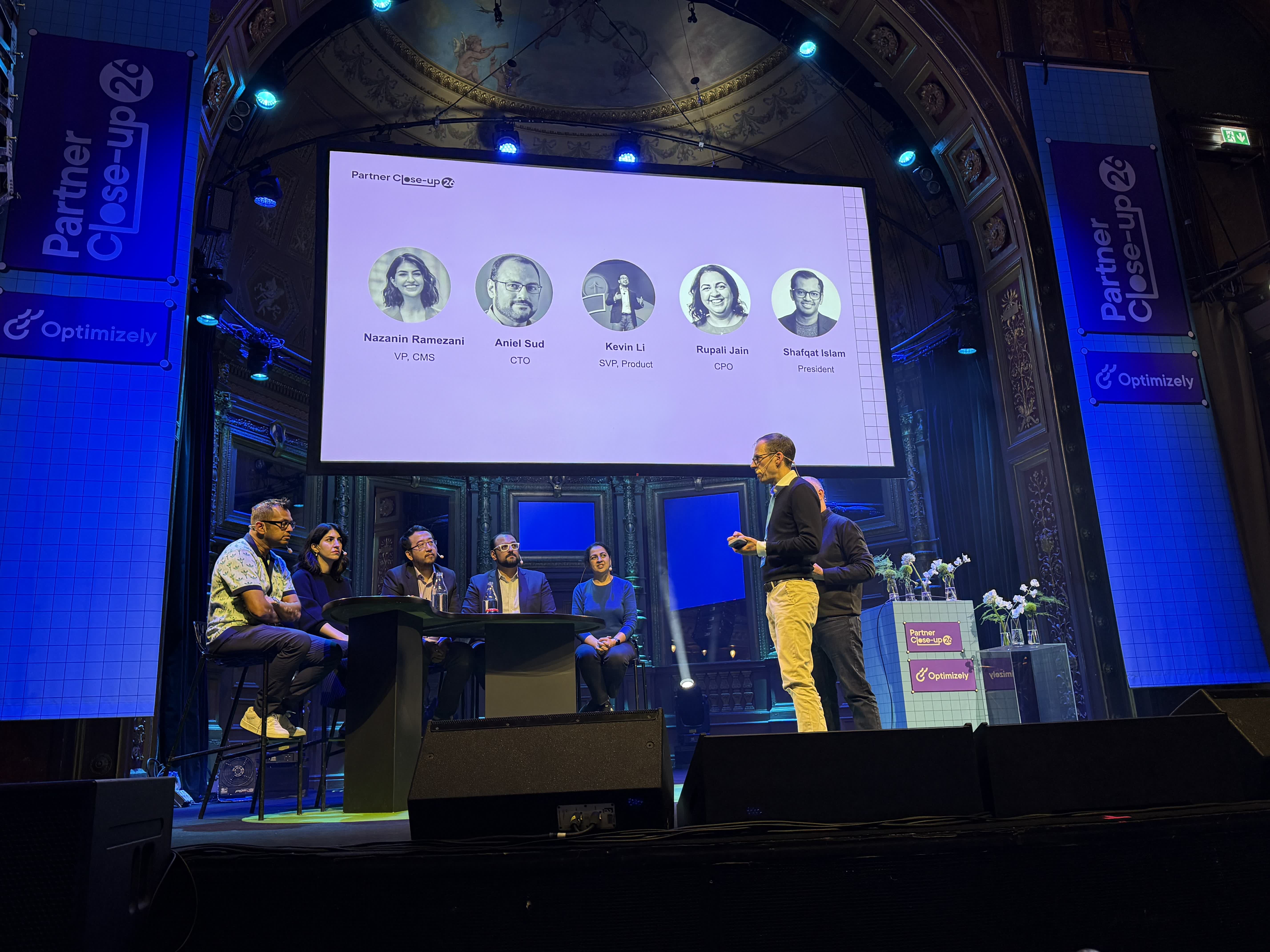
"Virtual teammates have their own identity, email address, and permissions. They are designed for multiplayer collaboration, allowing multiple people and agents to work in a shared space." Kevin Li
We aren't just building websites anymore. We are building the control towers of 2026. Autonomous operations where humans steer the strategy and agents handle the manual work. The choice for every leader is simple but uncomfortable. Are you building websites for the humans of 2015, or for the autonomous agents of 2026?
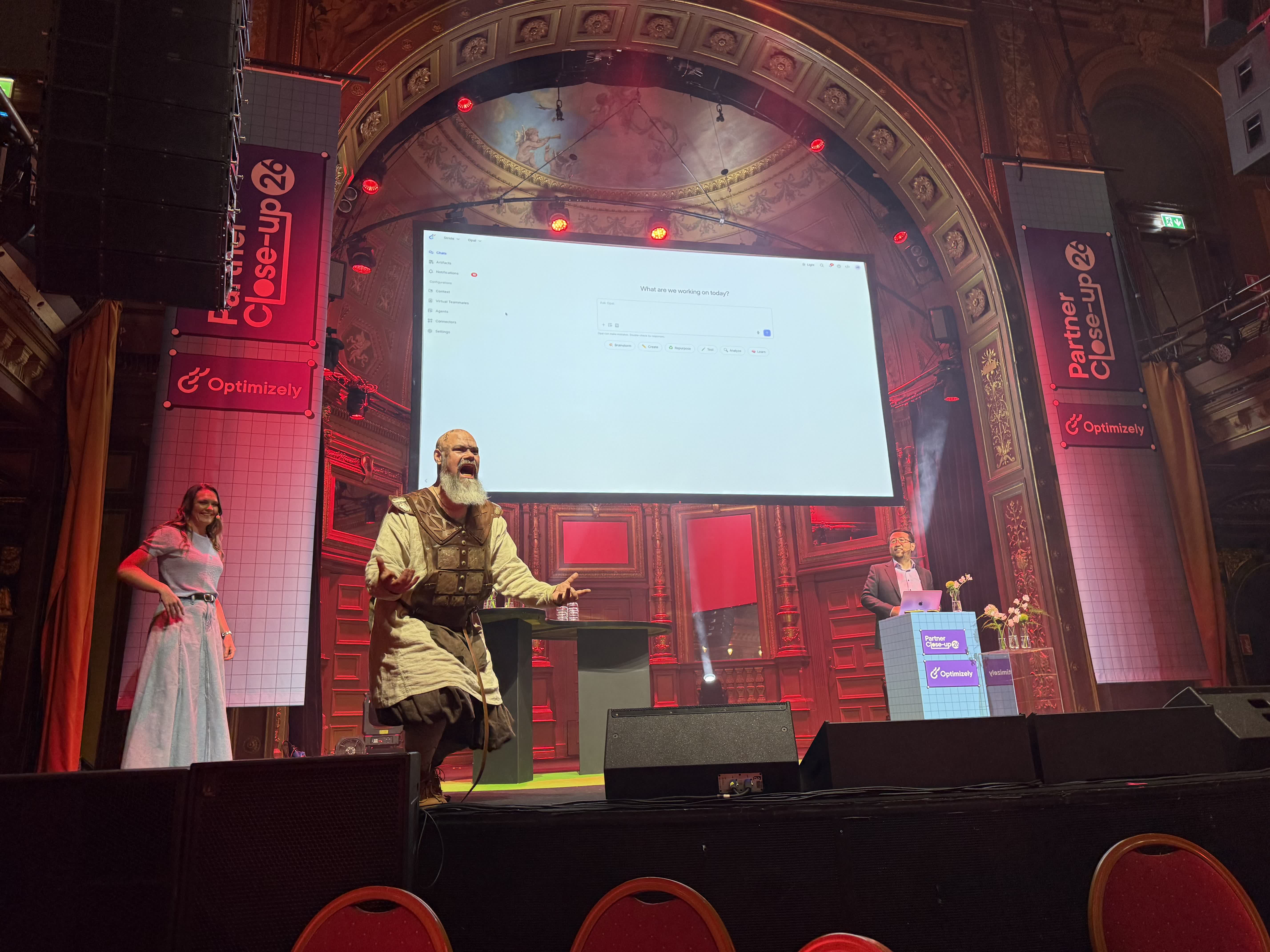
Oh, and there were Vikings...
Thanks for the writeup! Appreciated!